Is Your Concrete Settling or Heaving?
Your concrete is cracked and uneven. Whether it is your front steps, basement, garage, foundation, or driveway, you want to take care of this issue promptly before it becomes a much bigger (and more costly) problem. However, cracks in concrete are indicative of a couple of different potential issues, and it can be difficult to tell them apart without the eyes of a professional. When you need your concrete repaired in Colorado, Liftech is your best bet for courteous, prompt, and affordable service. Using our expertise, we can let you know precisely what is going on with your concrete, and how we can help you fix it. In the meantime, here is a guide to help you determine whether your concrete issue is due to the most common reasons for concrete to move: settling and heaving and if you can correct the issue with concrete leveling.
Settling
Chances are, if you have cracks in your concrete, it is either settling or heaving. But how do you tell the difference? These two separate issues are caused by different issues, and are indicated by different signs.
Causes
Settling can be caused by several different issues with the soil beneath the concrete. Most commonly, the structure was built on soil that was not properly compacted. This means that with time, the soil compacts unevenly beneath the concrete, causing it to settle. It could also mean that the soil on which it was built has a high clay content. As it rains, snows, and any other moisture seeps into the soil, the clay expands, which reduces strength and causes the concrete to sink. Similarly, if you do not have proper drainage, water can saturate the soil, also causing the concrete to settle.
Signs
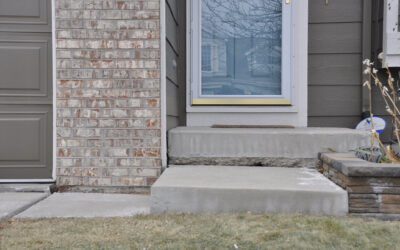
When concrete settles, it sinks downward. In general, you will see cracks in your garage and driveway first if your concrete is settling. The cracks generally look more concave than they do when your concrete is heaving.
Heaving
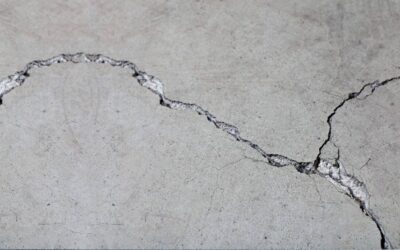
When concrete is “pushed up” due to expansive soil, tree roots, or more. This can look like a pitchers mound, and a key identifier is the cracks opening up, rather than pinching together.
Causes
Heaving is caused by poor soil conditions. The soil upon which the structure was built has a high concentration of clay, which as stated above, is highly absorbent of water. This causes the soil to swell when wet and shrink when dry. This consistent, uneven movement causes the concrete to become uneven, heaving upward and causing cracks.
Signs
In contrast to settling, heaving is usually indicated by the concrete appearing higher in the middle of the slab than on either side. The edges of the concrete slab may be crumbling, suggesting that the soil has moved several times. Cracking widthwise across the length of the garage entry is also an indication of heaving.
It’s okay if you still aren’t sure whether your concrete is settling or heaving; we can help with our extensive experience in diagnosing issues with concrete. Whether your concrete is settling or heaving, we provide concrete repair with an unparalleled level of professionalism. Simply put, you won’t find another concrete contractor in Colorado who is as reliable, affordable, or dedicated to quality as Liftech. Contact us today to learn more about how we can help you in the Denver area.