Concrete Leveling In The Winter
Work typically slows down in the wintertime, here in Denver because folks are getting ready for the holidays and preparing for tax time, but the primary reason for the slow down is the cold weather. Potential customers aren’t giving much thought too cold whether projects, especially considering that the majority of concrete leveling is done outside.
Although most people aren’t thinking much about their sinking concrete this time of year there are still a number of those who need to get these repairs done for other reasons, such as real estate transactions, renovations, safety issues, etc. Depending on the type of repair determines whether or not the work can be done.
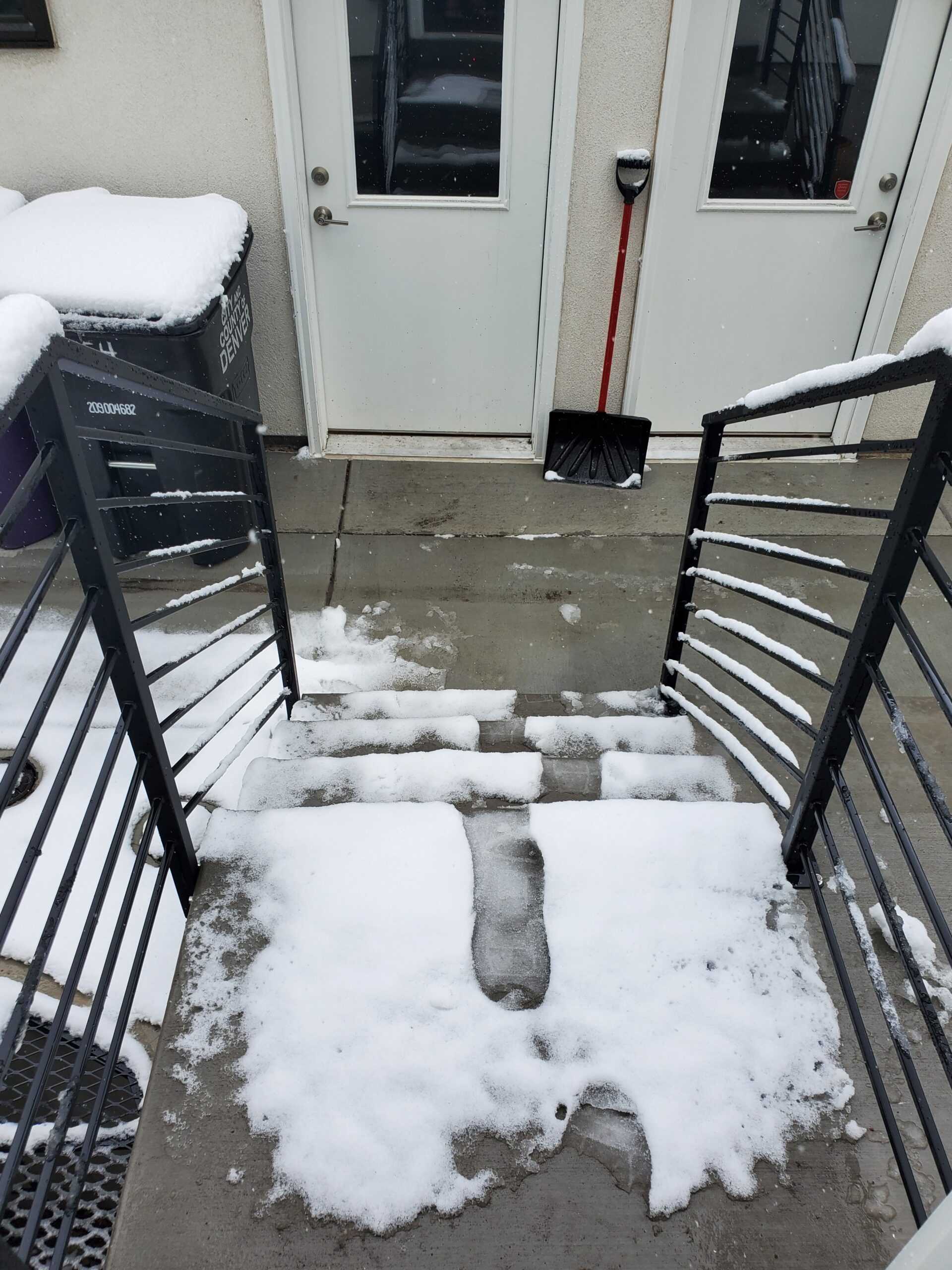
Obviously, outside temperature plays the largest role in whether or not your attempt to lift will be successful, however, there are other conditions that come into play. Ground temperature and ground freeze make raising exterior sunken concrete an impossibility for any method because the frozen moisture in the ground acts like an adhesive, gluing itself to the bottom of the concrete. Any attempt to lift could result in breaking the concrete prior to actually lifting it. Considering that, if you need garage floor leveling, basement leveling, or any interior concrete leveled Liftech can knock it our year-round. This is because this concrete and soil are within the frost walls, ensuring they aren’t frozen!
Mudjacking Vs. Polyurethane Concrete Leveling In The Winter
There are some significant differences between the two during the winter. Let’s take the process of mudjacking for example. Mudjacking uses hydraulic pressure to pump a mixture of wet sand under the slab to create lift. If the outside temperature drops below freezing the sand and water mixture can freeze inside the pump and hoses making it impossible to pump. Even if the material was able to pump, any residual mud that is left outside of the injection hole needs to be removed and cleaned which is typically done with water. Presenting excess water in a cold or freezing environment can be extremely hazardous. Most mudjacking is limited to outside work due to the level of intrusion and the possibility of “blow out”, and therefore little if any mudjacking is done in the wintertime.
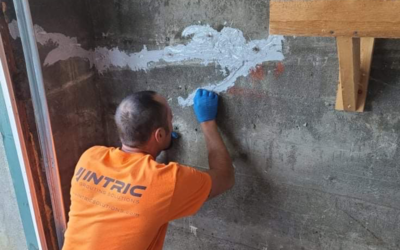
The other method for lifting and stabilizing concrete uses polyurethane. Although polyurethane still has some limitations for lifting concrete in colder weather, there is still a fair amount of work that can be performed. Unlike mudjacking, polyurethane is a two-part liquid polymer whose components are heated in a temperature-controlled environment and delivered to the point of injection using a heated hose. Polyurethane and its method of delivery to the affected area are unaffected by the outside temperature, and since it has a very low level of intrusion and no possibility of “blow out” using polyurethane can be a very effective method for inside repair in cold weather conditions. A few examples where polyurethane could be used in cold weather would be basements floors, garage floors or warehouse floors.
Regardless of the method used to lift concrete, the weather has the final say as to what will ultimately get done. A great deal of consideration needs to be given to the time of year that concrete raising starts and stops and it can change from one day to the next. One thing is for certain, all concrete-raising companies look forward to warmer temperatures to get back to business full time, to chip away at that backlog of work, and increase that bottom line.
Learn more about our process or request a free estimate today.