The Environmental Benefits of Concrete Leveling
For thousands of years, the world has sat on concrete. The Romans mixed cement, sand, and stone to make roads that are still intact today. Concrete is readily accessible, cheap, and relatively easy to work with. There is just one major drawback, the production of cement produces a large amount of CO2 emissions. According to thinktank Chatham House “Cement is the source of about 8% of the world’s carbon dioxide emissions”.
While new methods of producing cement are being researched, concrete, as we know it today, is not going anywhere anytime soon. With that said, extending the life of concrete can help reduce the demand for concrete which in turn will lead to less CO2 production. One of the most effective ways to extend the life of concrete is to restore it to its original position after it has moved or settled. This can be done with “slab jacking” or “concrete leveling” which Liftech specializes in, which is the process of using polyurethane foam injections underneath the concrete to raise it back into place.
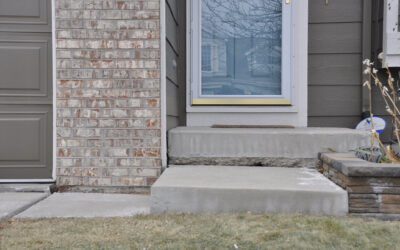
Concrete can settle for a number of reasons, but ultimately when it does it can create trip hazards, poor drainage leading to potential structural damage, code violations, and many more ailments that would have traditionally required it to be removed and replaced. This process of removing concrete takes a lot of energy, and the old concrete needs to be hauled away to a landfill or recycling plant. Then, when the new concrete is installed a large mix truck, a pump or boom truck, and other heavy-duty equipment is required to properly install the new concrete. Without even considering the CO2 caused by the production of cement, it’s clear that installing new concrete results in costly emissions and resources.
When concrete is leveled using an NCFI approved process, the crew can operate out of a much smaller and highly efficient vehicle and can have most repairs done within a few hours. It’s the difference between running heavy diesel machinery for a few days or running one small generator for a few hours. Additionally, no new cement production is required, saving the bulk of the CO2 production from the onset. The Polyurethane foam that is injected underneath the concrete slab is much sturdier than the soil it replaces, therefore the concrete’s life can be extended exponentially further, even indefinitely.
When just one concrete leveling crew runs for a day, they can prevent up to 5 concrete removals and replacements from taking place. Companies like Liftech run three or more crews full time for the entire year, that’s a lot of concrete saved! The environmental benefits of concrete leveling are clear and are just one method of bridging the gap between the efficacy of concrete and the environmental costs.