Why Your Garage Floor Cracks in Winter And What You Can Do About It
Colorado winters are tough on concrete, but your garage floor may be taking more damage than you realize. While outdoor slabs face snow, ice, and freeze-thaw cycles, garage floors are stuck between two extremes: warm air from your home on one side, and freezing outdoor temperatures on the other. That constant push and pull causes stress, especially in unheated or partially insulated garages, and over time, it shows up as cracks, sinking sections, or uneven slabs.
If you’ve noticed new damage forming or old cracks getting worse, it’s not just cosmetic. Garage floor problems tend to accelerate during cold months, and by spring, small issues can turn into trip hazards or structural concerns. The good news is, there’s a clean, non-invasive way to fix it.
Why Garage Floors Are Especially Vulnerable
Garage slabs deal with some of the harshest conditions of any concrete surface, especially in Colorado’s winter climate. Here’s why they’re so prone to cracking and damage this time of year:
- They’re exposed to extreme temperature swings.
While the house side of the garage may retain warmth, the exterior stays cold, especially near the garage door. This constant push and pull creates stress in the slab as different areas expand and contract at different rates. - They lack insulation and direct heating.
Most garages aren’t built with the same thermal protection as the rest of the home. Cold air moves in easily, and without consistent internal heat, the slab is more exposed to freeze-thaw conditions. - They experience high traffic and surface wear.
Tires, tools, snowblowers, and heavy storage racks all apply concentrated weight and friction. Over time, this causes hairline cracks to form, and those cracks worsen when temperatures drop. - They collect moisture and road salt.
Snowmelt, ice, and de-icing chemicals drip from your vehicle and seep into joints and surface cracks. When that moisture freezes, it expands, putting pressure on the concrete from the inside out. - They often sit on unstable or poorly compacted fill.
If the soil beneath the garage slab wasn’t properly prepared during construction, cold weather can trigger settlement, leading to uneven or sinking sections.
Together, these factors make garage floors one of the first places homeowners notice cracking, sinking, or structural movement as winter sets in.
How Freeze-Thaw and Temperature Swings Cause Cracking
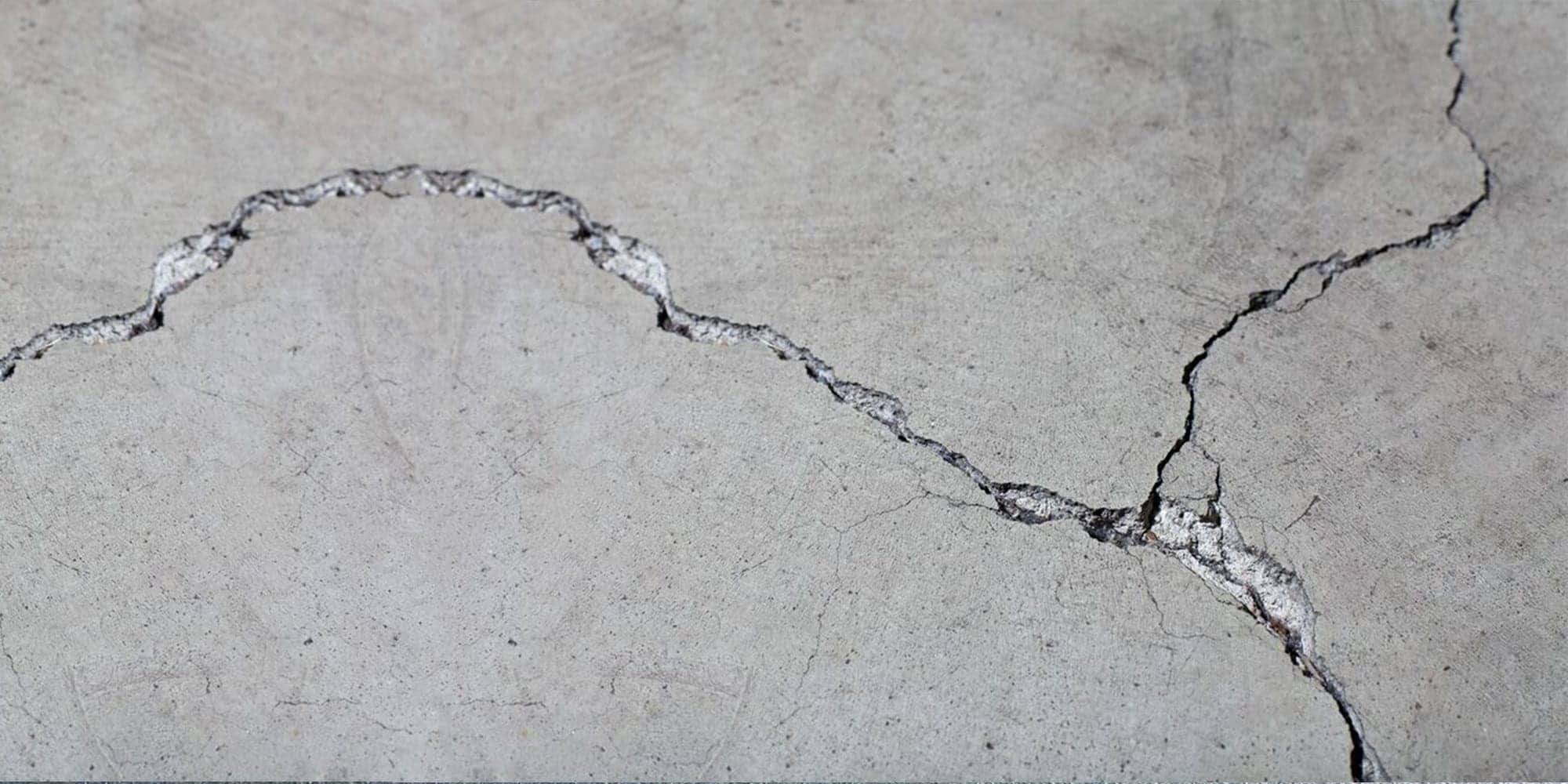
Concrete may seem solid and unchanging, but it naturally expands and contracts with temperature. When one part of a slab is exposed to heat while another is exposed to cold, like what happens along the interior wall of a garage versus the outer edge near the door, that movement becomes uneven. Over time, the stress from these cycles creates small fractures that spread deeper into the slab.
In winter, the problem worsens. Water from snowmelt, rain, or humidity seeps into surface cracks and joints. When temperatures drop, that water freezes, expands, and forces the cracks to widen. This cycle repeats daily in Colorado’s fluctuating weather, especially during early winter and spring thaws, causing existing damage to grow rapidly.
In unheated garages or garages built over poorly compacted soil, those cracks can also signal deeper movement. As frost penetrates the ground, it can lift or shift sections of the slab, creating visible unevenness or settling that worsens over time.
What to Watch for This Season
Winter can reveal hidden weaknesses in your garage floor or quietly make existing issues worse. Here are the most common signs that your concrete is reacting to cold-weather stress:
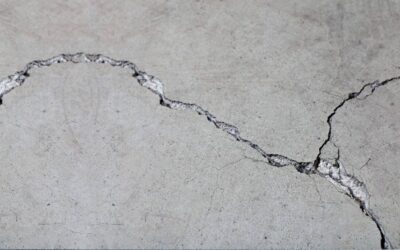
- New or widening cracks in the surface
Small hairline cracks that weren’t noticeable before can start to widen as freeze-thaw cycles take hold. Even minor shifts can signal deeper problems forming beneath the slab. - Uneven or sloping sections of the floor
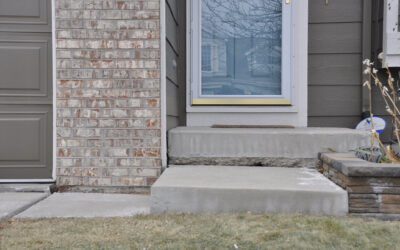
If part of your garage feels sloped, or you notice items rolling or shifting toward one side, the slab may be settling or lifting due to soil movement below. - Gaps along the base of the garage walls
Separation between the concrete floor and the foundation walls can indicate that the slab is sinking or pulling away, a common sign of voids or erosion beneath the surface. - Water is pooling inside the garage
If snowmelt isn’t draining properly or consistently flows toward one area, the floor may no longer be level. This can accelerate cracking and lead to long-term drainage issues. - Popping, flaking, or surface spalling
Moisture combined with road salt can weaken the top layer of concrete, leading to pitting or surface degradation, especially in older slabs without a proper sealer.
If you’re seeing any of these signs, it’s worth scheduling a professional inspection, especially before spring thaw or heavy runoff puts even more pressure on the structure.
How Liftech Can Help
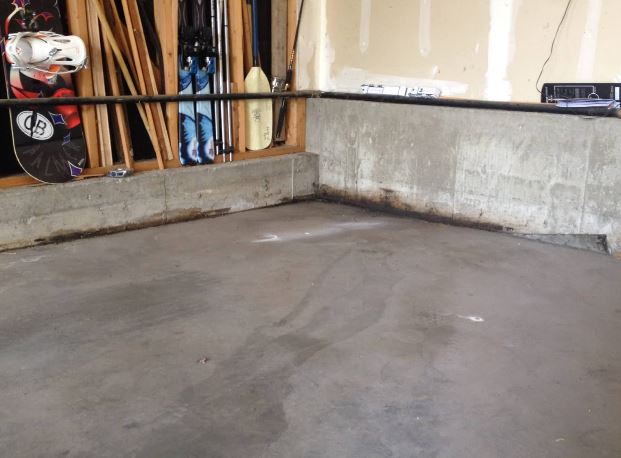
At Liftech, we repair sunken or uneven garage floors using a clean, fast, and minimally invasive process called polyurethane foam injection. Instead of tearing out and replacing your slab, we drill small holes, inject a high-density structural foam beneath the surface, and lift the concrete back into place. The foam expands to fill voids, stabilize the soil, and support the slab for long-term durability.
During warmer months, this process can often be completed in just a few hours, with no heavy equipment, no demolition, and no lengthy drying time. But in the winter, repairs depend on the site and weather conditions. If the ground is frozen or saturated, it may delay the injection process until temperatures rise and conditions stabilize.
That said, not every garage is off-limits in winter. If your slab is indoors, heated, or partially insulated, repairs may still be possible, even in cold weather. We evaluate each project individually to determine what’s feasible and safe for long-lasting results.
What to Do Now (Even If You Wait Until Spring)
Even if winter weather prevents immediate repairs, now is the best time to schedule an inspection. Catching the problem early gives you a clear plan heading into spring and lets you lock in priority scheduling before the busy season begins.
At Liftech, we can assess your garage slab now, document any cracking or settling, and prepare a repair plan so you’re ready to move forward as soon as conditions allow. In many cases, identifying issues in winter helps prevent more severe damage caused by thawing, runoff, or continued freeze-thaw cycles in early spring.
Whether your garage is fully heated or exposed to the cold, we’re here to help you understand what’s happening beneath your floor and how to fix it when the time is right.